Monday, November 27, 2006

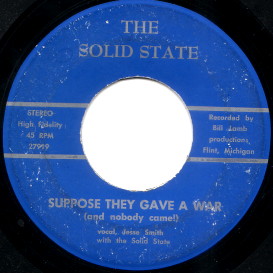
Forgotten 45's: The Solid State


Here's a record by a group called The Solid State I've had since I was a kid. I got it in a box of 45's that belonged to my grandma, but I have no info about it or the band, nor can I find any. A really great psych/hard band sound on the A side "Suppose They Gave A War (And Nobody Came!)", an anti-war statement very relevent even today. The B side "Life's Confusion" is softer and features a different, more nasaly vocalist, and is more introspective. Both tunes utilize the then fairly new Wah-Wah pedal to full effect, in almost similar riffs. The label places this as being recorded in Flint, MI, close to my area, the year unknown I would guestimate as being somewhere between '68-'71, just judging by the sound and subject matter alone. A really great record and worth a listen for sure. When I first discovered it I played it to no end!

Jesse Smith: Vocals side A, Doil Smith: Vocals side B
Recorded by Bill Lamb Productions Flint, MI


Password: musiconthefringe.blogspot.com


DOWNLOAD

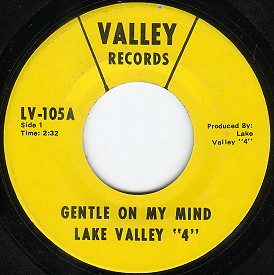
Forgotten 45's : The Lake Valley Four


Here's an intriguing little artifact I picked up some time ago at an antique shop. I got two 45's and a promo photo of this band the Lake Valley Four. The back of the photo has this inscription: "Free picture with record. The Lake Valley Four back in the 70's years." Most likely very early 70's or even late 60's I'm thinking. Not sure where Lake Valley is, might be in Michigan, where I'm from, or might not be a town at all. But anywhoo this is an interesting listen. The female singer has a strange voice not unlike that of Peewee Herman or maybe Dylan in his country phase. The band isn't that great and the records are a little scratchy but I just think it's a pretty cool little find! My personal fave is their take on 'Everybody's Talkin".

Update: Since posting this on my old blog, Mark from Canton, Mi has given me some some usefull info on this group! Thanks Mark!

mark said...
I've seen this group many times! The Lake Valley 4 used to perform at a campground "Fitchburg Wilderness Park" near Stockbridge, Michigan every Sturday night. It must've been 1972-1974. The members, if my memory suits me, where" Jim Libey on guitar, Cindy Gadbury on vocals, Sue Libey on drums and Harold ____? on accordian. They performed country and soft pop for the campground crowd. I actually purchased their 45 with an original "Lonely Star". I think I forked over 50 cents for it. Boy! Did your post bring back an old memory!!! -Mark, Canton, MI

Disc One LV105: A) Gentle on my mind B) Everybody's talkin'
Disc Two LV106: A) Shoeshine man B) How do you mend a broken heart

Password: musiconthefringe.blogspot.com

Michael Hurley and Pals "Armchair Boogie"
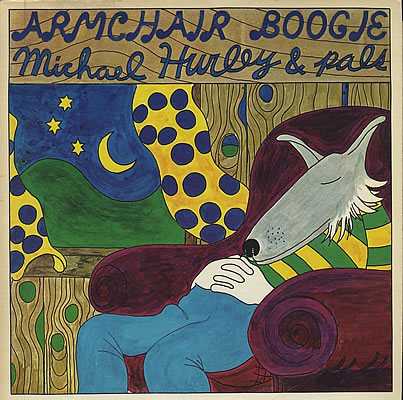

In a way this is Michael Hurly's debut album. He had recorded an album for Folkways in 1965, but didn't return again for a few years, laying low and writing songs for the Youngbloods and others. In 1971 he signed with the Youngbloods' Racccoon label and recorded this great album with their lead Jesse Colin Young producing and playing on a couple tracks. An all around charming, warm album. Humorous and strange at times but very easy. Sound like it was recorded in a small room (I think it was), adding to it's hominess. The record includes a large comic book following the antics of two hick wolves, Jocko and Boone and is hilarious. Ripped from vinyl, Check it out!
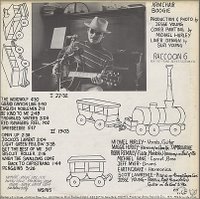
1. The Werewolf
2. Grand Canyon Line
3. English Noblemen
4. Be Kind To Me
5. Troubled Waters
6. Red Ravagers Reel
7. Sweedeedee
8. Open Up
9. Jocko's Lament
10. Light Green Fellow
11. Get The Best Of Me
12. Biscuit Roller
13. When The Swallows Come Back To Capistrano
14. Penguins

Password: musiconthefringe.blogspot.com

The Music Machine "Turn On The Music Machine"


The Collectables label has given this CD a new and misleading subtitle, and (to judge from the reviews below) that's obviously created a lot of confusion about its content. To set things straight: tracks 1-12 are the complete contents, in order, of the Music Machine's first album, "(Turn On) The Music Machine," which was released in 1966 to back up their hit single "Talk Talk." Tracks 13-16 are different (earlier?) recordings of songs from the second album, "The Bonniwell Music Machine," which sank without a trace in 1967. So this disk is essentially a reissue of the first album, with four bonus tracks added. Even the cover of the CD booklet is identical to that of the first LP (other than the altered title).
In recent years, Sean Bonniwell, the leader and only persistent member of the group, has explained the multiple cover versions on this album as something Warner Brothers forced on him. His original concept was to have little instrumental segues between the tracks, so that each album side was a continuous experience --- the output of a "music machine" --- but the label shot that down too. Bonniwell was a few years ahead of his time, unfortunately, and these recordings don't represent the full range of his talent.
Nonetheless, this album absolutely shouldn't be put down. For many years after the 60s garage revival really kicked in it was the only Music Machine product available, and many people (including me) loved it for the combination of sinister organ sounds and deep vocal melodies, as well as for the unprecedented-in-1966 percussive guitar violence of "Talk Talk." Bizarre, dark Bonniwell originals like "Come On In" blow away the sappy-60s pop that gets in elsewhere. (If you ever took the Doors' songwriting seriously, you won't after hearing this band.)


1. Talk Talk
2. Trouble
3. Cherry Cherry
4. Taxman
5. Some Other Drum
6. Masculine Intuition
7. People In Me, The
8. See See Rider
9. Wrong
10. 96 Tears
11. Come On In
12. Hey, Joe
13. Double Yellow Line
14. Absolutely Positively
15. Eagle Never Hunts The Fly, The
16. I've Loved You

Password: musiconthefringe.blogspot.com

Saturday, November 18, 2006

Daniel Johnston PART ONE

Daniel Johnston is one of the most incredible songwriters you've never heard. Destined for the underground, his sound is bare bones, usually nothing more than voice with piano, guitar or chord organ. To some it may sound elementary, but when you dig deeper you find some of the most heart wrenching songs ever written. Oddly enough his popularity stems from his own hand made cassette demos that he passed out to friends and fans. Here are two of his earliest cassettes.


"The What of Whom"
Daniel's tape from August 1982.

Password: musiconthefringe.blogspot.com


"Don't Be Scared"

Daniel's tape from July 1982.

get this over at Ninja Berserker's site

POST LINK

Syd Barrett "The Madcap Laughs"


Having left Pink Floyd in 1968 after a daily LSD habit had taken its toll, Syd Barrett's first solo album finally appeared two years later with ex-Floyd sidekicks David Gilmour and Richard Wright riding shotgun with him in the studio. The Madcap Laughs is a brilliant but brittle album, with every strum of the electric guitar seeming to take its toll on Barrett's increasingly frayed nerve strings. On songs such as "Love You," his state of mind is well concealed beneath the sort of jolly jangle-pop Blur would later indulge in. On "Dark Globe," however, the strain is palpable: "Please lend a hand ... won't you miss me? Wouldn't you miss me at all?" he pleads, ominously. The best tracks are "Octopus," which possesses all the controlled mania of early Floyd, and "Golden Hair," a still moment of musical rapture whose lyric is taken from a James Joyce poem. --David Stubbs, Amazon.com

Password: musiconthefringe.blogspot.com


Seu Jorge "Life Aquatic Sessions"


Raised in the slums of Rio, Brazil, singer/songwriter Seu Jorge used his formidable talent and undeniable charm to great effect in director Wes Anderson's seafaring comedy the Life Aquatic with Steve Zissou as a guitar strumming deckhand. The catch was that Pelé dos Santos only knew how to play Portuguese versions of David Bowie tunes, all 13 of which are featured on Hollywood's Life Aquatic Studio Sessions. Jorge possesses a voice that exudes the same regional comfort as fellow countrymen Milton Nascimento and Caetano Veloso, and his warm and loose guitar playing matches his timbre, resulting in a batch of covers that retain the original framing of the Bowie classics, while injecting a sunny island sweetness into their very core. While the very idea reeks of kitsch, the end product is surprisingly poignant and agreeable. Even the Thin White Duke himself seems taken with the idea, as he states in Aquatic's liner notes that "Had Seu Jorge not recorded my songs acoustically in Portuguese I would never had heard this new level of beauty which he has imbued them with." - by James Christopher Monger, AMG
Great music from a great movie. Wes Anderson is among the best directors of our time, and his soundtracks are alway an wisely chosen group of songs from artists on the fringe of music. See his movies!

1. Rebel Rebel
2. Life On Mars?
3. Starman
4. Ziggy Stardust
5. Lady Stardust
6. Changes
7. Oh! You Pretty Things
8. Rock N' Roll Suicide
9. Suffragette City
10. Five Years
11. Queen Bitch
12. When I Live My Dream
13. Quicksand
14. Team Zissou

Password: musiconthefringe.blogspot.com


A Still from the film "The Life Aquatic"

Friday, November 17, 2006

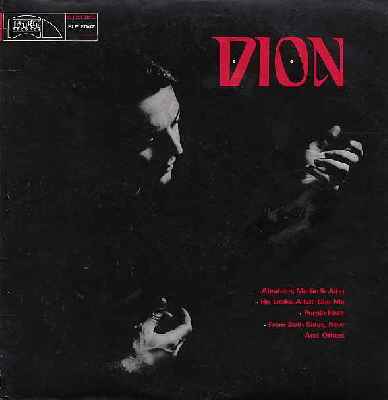
Dion "Dion"


This is Dion's great lost album from 1968. Dion is famous mostly for his work with the Bellmonts for great songs such as "The Wanderer" and "Runaround Sue" with their aggressive teenage snarl. But drug problems caused him to go on hiatus for a few years. When he came back with this album his sound had matured to another level, and his voice had softened into that great balladeer not leaving behind some of his stylistic scat singing though. I really dig this album a lot, its very easy going and soothing at times. His take on some of these covers is truly original, the best example being Hendrix's "Purple Haze". Also includes his comeback hit "Abraham, Martin, and John" and his own stirring war ballad "He Looks A Lot Like Me". Not sure if this is out on cd or not but here is a clean sounding rip from my vinyl copy.

Abraham, Martin And John
Purple Haze
Tomorrow Is A Long Time/Everybody's Talkin'
Sonny Boy
The Dolphins
He Looks A Lot Like Me
Sun Fun Song
From Both Sides Now
Sisters Of Mercy
Loving You Is Sweeter Than Ever

Password: musiconthefringe.blogspot.com

Marr'Del "The Mystery of Love"
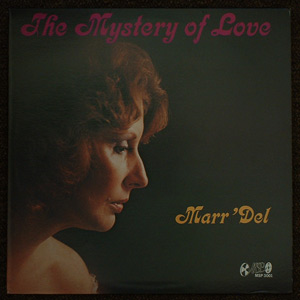

"My music and poetry is an attempt to move you into the depths of your heart... beyond the thinking mind... deep into the flow of Love that is the Godstuff of which you are made... and when that happens, you will never be the same."-- Marr'Del, from the liner notes
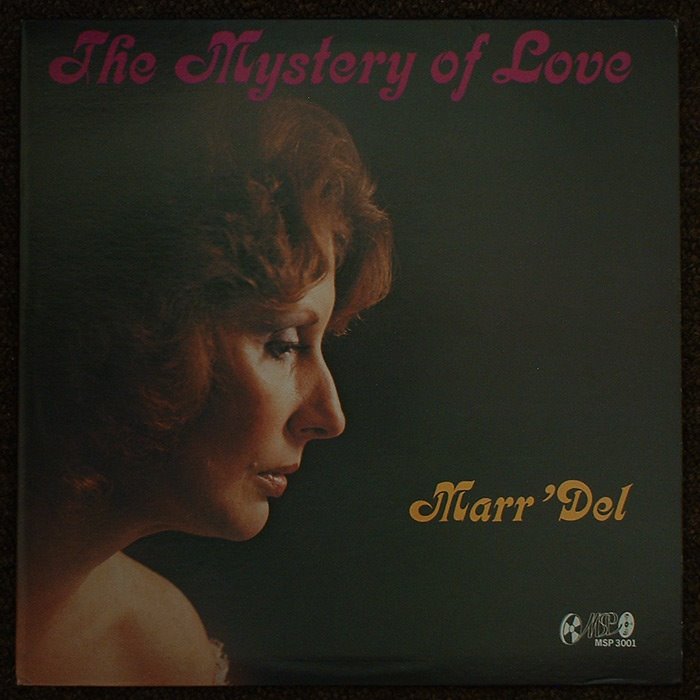
This is it -- the notoriously unknown 1979 Ohio folk-psych classic The Mystery of Love by Marr'Del. Each side features three tracks that are slow, quiet, dreamy and sparse; 'Psalm to the Sun' and 'Lavender Thunder' with guitar, the other four dialogues or monologues with autoharp accompaniment. Atmospheric nature recordings pepper the album, but every other sound comes from Marr'Del herself. (As she wrote to me, "I had no musical training, was completely self-taught on the guitars and harp, and I just let it happen. I guess that's good we don't know the complexities of some of the things we accomplish, or we would never undertake the project/situation.") This is an incredibly brave and moving record that will enchant some and embarrass others in its spiritual intensity.

The Mystery of Love MSP-3001, 1979
1. Maria (12:18)
2. Butterfly Friend (4:54)
3. Psalm To The Sun (6:46)
4. Celestial Cathedral (7:43)
5. Lavender Thunder (4:29)
6. I Want To Be A Wave (4:18)

Thanks to www.nothingexceptional.com for this great find.

Link here to download the tracks individually and read more.

Tuesday, November 14, 2006

"Girls With Guitars"


Ace Records out of the UK follows up on some other all female 60s rock cds they've issued in the past (including the cd compilation of She/Hairem music called She Wants a Piece of You). It's great to hear a modern compilation which delves into the area that is so under represented on legit cds. She and The Hairem are of course featured (Come On Along and Outta Reach - both highlights from She Wants a Piece of You) and other highlights include:

The Beattle-ettes's let it hang out Beatles response style on Only Seventeen which answers a number of Beatles tunes while also emulating Lesley Gore's beat sound.
The Pandoras' I Could Write A Book About My Baby has been collected bootlegged (on Touch the Wall of Sound) so it's good to hear this Boston area all female rock band get a legit cd reissue - they've got a number of singles worth checking out, along with this girl group gem.

The Goodees give us the southern raunchy best on their Stax/Volt inspired take on the fratboy classic Double Shot (Of My Baby's Love) singing lyrics girls weren't really singing in 1969:

"What happened to me last night
That boy of mine, he loved me so right
He loved me so long and he loved me so hard
I finally passed out in his front yard
It wasn't wine that I had too much of
It was a double shot of my baby's love!"

The Goodees are a vastly overlooked girl group who recorded for Stax' pop label Hip and consisted of Sandra, Kay and Judy. They released one album on Hip called Candy Coated Goodees and a handful of singles (some of which that didn't make it on the lp and which had Stax people like Isaac Hayes helping out) which is all dying to be reissued on cd.

The Daughters Of Eve are an all female band definitely worth checking out. Their tune Help Me Boy (a tune also cut by Eric Burdon and the Animals earlier in 1967 as Help Me Girl) will definitely get under your skin with its intense arrangement and sleepy girl lead vocal which reminds me of The Goodees style. You can read about The Daughters Of Eve here.

The 2 Of Clubs try their hand at the Petula Clark tune Heart - which emulates the beat of someone's heart in the rhythm changes - something so unique to 60s songwriting style and worth hearing just for that 60s southern Muscle Shoals sound.

The call and response Headcoatees like putdown of The Angels' Get Away From Me that has a slinking groove, sassy dual female lead vocals and hip organ solo. The fiery Boy, What Will You Do Then by Denise & Company will definitely fire you up with the burning harmonica and Denise's angsty lead vocals.

Al Casey gets some help from the K-C-Ettes on the fab Guitars, Guitars, Guitars which of course is a song about the wonderful sounds of guitars.

1. My Baby - The Girls
2. I'd Rather Fight Than Switch - The Tomboys
3. Get Away From Me - The Angels
4. Boy, What You'll Do Then - Denise & Company
5. Chew Chew Fee Fi Fum - Goldie & The Gingerbreads
6. Only Seventeen - The Beattle-Ettes
7. Do The Dog - Sugar & The Spices
8. I Got A Guy - Kathy Lynn & The Playboys
9. Double Shot (Of My Baby's Love) - The Goodees
10. (I Could Write A Book) About My Baby - The Pandoras
11. They Are The Lonely - Pat Powdrill & The Powerdrills
12. Heart - The 2 Of Clubs
13. Help Me Boy - The Daughters Of Eve
14. Skinny Vinnie - Goldie & The Gingerbreads
15. Hully Gully Guitar - The Percells
16. Rock City - Kathy Lynn & The Playboys
17. Sticks And Stones - (Lonnie Mack &) The Charmaines
18. Take My Hand - Goldie & The Gingerbreads
19. Boys Can Be Mean - Sugar & The Spices
20. Guitars, Guitars, Guitars - (Al Casey With) The K-C-Ettes
21. Vip - Goldie & The Gingerbreads
22. Come On Along - The Hairem
23. My Love - The Girls
24. Outta Reach - She

Password: musiconthefringe.blogspot.com

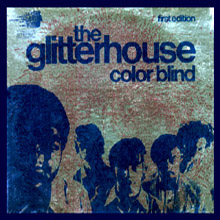
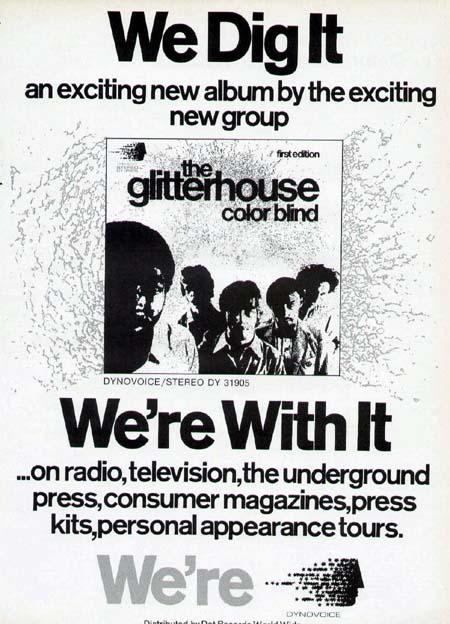
The Glitterhouse "Color Blind"


Great psychedelic pop from 1968, with lush production from Bob Crewe. A great album that has yet to be remastered in CD form (although it is available on a compilation that includes most of the bands work, it is only recorded from a vinyl copy). If you've ever seen "Barbarella" you'd remember this group for doing the title theme ("Barbarella, psychedella.........")

The original liner notes from the Glitterhouse's "Color Blind" album, written by then popular NYC FM radio jock, Rosko:

I was a vacuum - I smelled a rose - that vacuum was filled. I was a vacuum - I saw a child - that vacuum was filled I was a vacuum - I touched my love - that vacuum was filled. I was a vacuum - I heard music - "The Glitterhouse" - expressing extensions of everything we feel; extensions of what we are - the reward of what we could be; .....new dimensions of the folly and heroics of society; of fickle lady justice and the long nights she capriciously gives injustice a lay;.....extensions of words set to music effecting a union so complete that it becomes music set to words. I heard music - "The Glitterhouse" - and my vacuum was filled...listen and fill your vacuum. - ROSKO- WNEW-FM New York 1968

Password: musiconthefringe.blogspot.com

Monday, November 13, 2006

Larry Coryell "Coryell"
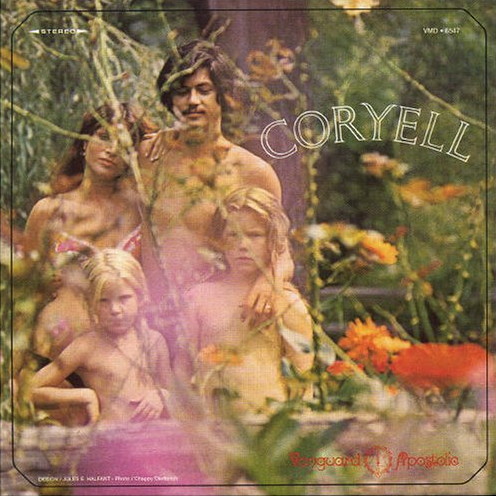

A repost from my old blog that seemed to be pretty poular.
This is Larry Coryell's second solo album, and it's a real mind blower. Coryell is often categorized as a jazz guitarist, but this one is a jazz - rock - funk fusion. The first track "Sex" is a mind numbing psychedelic groove complete with crazy leslied vocals. An all around good album to get down to, with some soft moments as well.

CORYELL - 1969 (VSD-6547)

Larry Coryell, guitar, vocals, piano (Beautiful Woman)
Bernard Perdie, drums
Albert Stinson, bass (The Jam With Albert, No One Really Knows Part 2)
Ron Carter, bass (Beautiful Woman, Ah Wuv Ohh)
Chuck Rainey, bass (Sex, Elementary Guitar Solo #5, No One Really Knows Part 1, Morning Sickness)
Mike Mandel, organ, piano (Elementary Guitar Solo #5)
Jim Pepper, flute

01Sex
02Beautiful Woman
03The Jam With Albert
04Elementary Guitar Solo #5
05No One Really Knows
06Morning Sickness
07Ah Wuv Ohh

Mississippi John Hurt "The Immortal"


One of the best albums of country blues ever recorded. The fingerpicking is delicate, the vocals mellow and sweet. Many tunes that remain associated with Hurt are included here in versions that rival his legendary recordings from the late '20s. "Richland Woman Blues," "Stagolee," "The Chicken," and "Since I've Laid My Burden Down" sound as fresh as ever in these '60s versions. This album leaves little doubt as to why Hurt was so beloved after his rediscovery.


Password: musiconthefringe.blogspot.com

Tuesday, November 07, 2006

Serge Gainsbourg "Histoire de Melody Nelson"


I wish I could speak better French, so that I might fully understand the words on Histoire de Melody Nelson. According to my trusted French friends, Gainsbourg's lyrics are pure poetry, bestowing a level of brilliance to his music that I literally can't comprehend. But that hasn't deterred me. Familiar only with the bare facts of Melody Nelson's darkly sensual story, my imagination performs a miraculous feat of translation, in which I feel the hidden meaning behind Serge's songs, losing myself in his impenetrable lyrics like a voyeur in a foreign land. I listen on, unsure of what I'm hearing, but titillated nonetheless by all the obvious decadence. French or otherwise, you don't have to speak the language to experience Melody Nelson's incredibly great music, but a little backstory certainly helps. Taken together, the seven songs on the album form a lurid tale of obsessive love told with extraordinary intelligence and humor, making it the musical equivalent of Nabakov's novel, Lolita. The album is about a lecherous, middle-aged, Rolls-Royce driving Frenchman (Serge, of course) who runs into a virginal teenage cyclist-vixen (played by his young and beautiful British-actor wife, Jane Birkin, who sings on the album and appears on its cover seductively clutching a rag doll against her bare breasts —hello dolly!). Serge the hunter stalks his prey, and with seduction comes love, which is consummated at "L'Hotel Particulier" (and for us all to hear on "En Melody"). The affair ends in rock-opera tragedy, with the flighty Melody killed in a plane crash, leaving behind a shattered wreck of a man to tell us his harrowing tale on "Cargo Culte." These scintillating details should provide enough grist to set any good Anglo-Saxon imagination grinding. What language barrier? Story aside, the music on Melody Nelson is way ahead of its time—an experimental blending of spoken-word vocals, lushly epic pop strings, soaring choir voices, funk-flavored rock grooves and loud guitar. According to Beck, the album is "one of the greatest marriages of rock band and orchestra...It's very cool and its dynamic is genius—there's this band that's completely rocking on this almost acid tangent, but they're buried in the mix with him (Gainsbourg) whispering on top, and he's the loudest thing on it."A perfectly realized concept album, a sonically inventive poem of perversion, Melody Nelson was hailed by few critics of its time, failing to become a hit, even in France. Today we can better appreciate its magnitude, with disciples like Air and David Holmes successfully slipping the Serge sound into the musical mainstream. Histoire de Melody Nelson stands as one of the shortest essential albums in rock history (my only complaint, if you can call it that), with a total running time of 27:06. Still I warn you: spend a good half-hour with it, and you might soon start wanting French lessons.—John Ballon

Password: musiconthefringe.blogspot.com

DOWNLOAD

Big Boy Pete "World War IV: A Symphonic Poem"
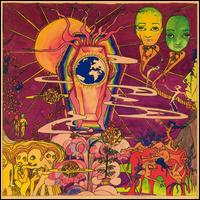


A psychedelic oddity from the warped mind of Big Boy Pete (aka Pete Miller), an entirely unreleased masterwork from his prodigious and endlessly creative 1966-1969 period. World War IV is labeled a "Symphonic Poem," and whatever that exactly connotes in pop terms is anyone's guess. It is certainly not a conventional song-based effort but a true epic, one that is segmented into extended classical-like sections with titles such as "Overture" and "Movement." One certainty is that the album is wide-lensed, a sweeping and ambitiously panoramic experimental piece of avant-garde psychedelia that shares numerous qualities with the equally idiosyncratic but still commercially minded psyche that Big Boy Pete had previously created, while transferring those qualities to a much larger, mural-sized canvas. As can be expected, the storyline (if it can be called that) is willfully obscure and far-out even by psychedelia's standards, loosely imagining a fourth world war peopled not by military personnel but rather a host of eccentric characters. While World War IV is not exactly designed to be accessible in the manner of a collection of Big Boy Pete's pop songs, it sustains both a painterly and literary quality that is every bit as enveloping. In fact, John Lennon loved the album and Apple Records nearly released it in 1969. Miller's uncanny penchant for wordplay is vaguely Beatlesque, although a more appropriate comparison might be that World War IV is a British counterpart of sorts to Love's Forever Changes, betraying the same kind of warped worldview shared by Arthur Lee. Demented observations and mad, darkly humorous puns often undercut the whimsicality of the piece. Miller imagines a world in which the crucifixion of Christ, Nazi Germany, Hansel & Gretel, Oz, Alice's wonderland, Barnum & Bailey's circus, mediævalism, and Wordsworth seem to coexist and intermingle in a freakish alternate universe in the countryside of England. Biblical imagery abounds, as do fairytale characters, gypsies, and armies of children straight from the "outsider" art of Henry Darger. Without immediately dating itself, the album contains embedded commentaries on war, spirituality, political power, and a great number of other subjects that were especially endemic to the era. There must be fragments of 20 or 30 individual songs spliced into the mix -- ranging in style from mindbending psychedelia to Baltic folk melodies -- including perhaps the most beautifully sustained example of backwards phasing (during the dirgelike fifth section, "Quietus") in the entire psychedelic canon. The cycle culminates in the stunningly ambitious "Finale." Prophetic, unpredictable, labyrinthine, and frequently disturbing, World War IV is just about as imaginative as pop music gets. It is ultimately impossible to follow the path that Big Boy Pete is trying to burn through the forest, but it is thrilling even when the listener gets lost along the way. The album, as one lyric during "Movement 2" has it, is "deformed so beautifully." Not the first stop for neophytes looking to understand the Big Boy Pete legacy by any means, World War IV may nevertheless be his definitive artistic statement, and the premier slice of "outsider" pop from the period. ~ Stanton Swihart, All Music Guide

DOWNLOAD

Monday, November 06, 2006

Moondog "The Viking of Sixth Avenue"


While many modern music fans have heard of Moondog—his counterculture reputation and musical achievements have been celebrated by hipster and conservatoire musicians alike for over fifty years—relatively few have actually heard his music. Acquainted with and endorsed by Charlie Parker, Lester Young, Igor Stravinsky, and Artur Rodzinski in New York in the late '40s and '50s, and by Janis Joplin, Frank Zappa, Steve Reich, and Philip Glass in the '60s and '70s, his most recent high-profile champion has been Elvis Costello, who booked him for London's Meltdown Festival in '95.

Moondog lost his sight in an accident at age sixteen, and his musical development was accelerated at various schools for the blind. He moved to New York in '44 and took the name Moondog (he was born Louis Thomas Hardin) in '47. Around this time he also adopted full-on Viking dress—to disassociate himself from Christianity, he explained—and began playing his tunes on the streets of New York. The streets remained his preferred performance platform throughout his life.

Moondog's music is simple and almost childlike—in the best sense of the word, naive. Most of these tracks, melodically attractive and rhythmically virile, last little more than two minutes, providing brief expositions of rhythmic or textural ideas. Having put an idea forward, Moondog rarely shows any interest in developing it, preferring to move on to another thought. Even the closing “Invocation,” at ten minutes by far the longest track on the album, recorded at the Meltdown gig and featuring a full-blown symphony orchestra, is a sixteen-part canon which simply repeats the same low A throughout. Apart from ”Invocation,” “Lament 1 - Bird's Lament,” and “All Is Loneliness,” most of the tracks are overdubbed, with Moondog playing all the instruments.

This wonderful anthology, packed with rare-as-hens'-teeth recordings, spans Moondog's output from '49 to '95, focusing primarily on his prolific '50s output. Several labels are sourced, including Moondog's own eponymous imprint and Woody Herman's Mars, as well as Brunswick, Prestige, and Folkways. Two tracks come from his '70 Columbia album (he'd been signed at Janis Joplin's urging): the madrigal “All Is Loneliness,” which had been covered by Big Brother & The Holding Company on their debut album; and “Lament 1 - Bird's Lament,” composed in memory of Charlie Parker and one of Moondog's signature tunes.

Moondog's period in the counterculture spotlight in the early '70s brought him a brief taste of fame, but no fortune. He remained true to his roots and his principles, and celebrated his newfound status as a Columbia recording artist by moving his street pitch to the pavement opposite the label's plush Manhattan headquarters.

In the mid '70s, Moondog moved to Germany, where he continued playing and composing up until his death in '99. The world is a better place for his music, and if you haven't heard any of it yet, this rich and beautiful collection is the perfect place to start.

Personnel: Moondog: percussion, drums, tuned percussion, saxophones, flutes, oud, vocals, violin, pipe organ, tape manipulation, miscellaneous; Orchestra (6,15,36).

DOWNLOAD


© New Blogger Templates | Make Money Online