Tuesday, September 15, 2009

WELCOME!

Hello all! This blog is now back in action (I hope)! I've been "Busy doin nothin" as they say. Actually Brian Wilson says it on the "Freinds" album available here. Also I changed up the look a bit after I reverted to the new widget based layout (it makes things a lot easier). For the blog header I altered the cover of Nancy Sinatras "Boots" album cuz I've always liked it and she's a babe.

Anywho, all new posts will not have passwords for the .rar files, it just makes things more complicated. As for the older posts, all of the links are still good and the password for those is still musiconthefringe.blogspot.com

Friday, September 21, 2007

John Lennon & Yoko Ono - Unfinished Music, No. 1: Two Virgins


The result of an all-night session of musical experimentation in Lennon's home studio at Kenwood, John and Yoko's debut album is known not only for its avant garde content, but also for its cover. The couple used a time delay camera to take nude photographs of themselves, the front cover displayed them frontally nude, while the rear cover featured them from behind. (The photos were taken not at Kenwood, but at Ringo Starr's basement apartment at Montagu Square, where Lennon and Ono stayed later that year.) The recording consists largely of tape loops, playing while Lennon tries out different instruments (piano, organ, drums) and sound effects (including reverb, delay and distortion), changes tapes and plays other recordings, and converses with Ono, who vocalises ad-lib in response to the sounds. Lennon's longtime friend Peter Shotton remembered later in his memoir that many of the loops were made by Lennon and himself, in the days before the recording. Lennon recorded directly to two-track stereo, but much of the source material was monophonic. Two Virgins was the second album released under the Apple Records label, after George Harrison's Wonderwall Music. It was distributed by Transatlantic Records in the UK and Tetragrammaton Records in the USA, after EMI in the UK and Capitol Records in the US refused to handle it, because of the cover photo.

DOWNLOAD

John & Yoko - Unfinished Music No.2: Life with the Lions


Unfinished Music No.2: Life with the Lions
is an album of experimental music released by John Lennon and Yoko Ono in 1969, and the successor to 1968's highly controversial Unfinished Music No.1: Two Virgins. The title parodies the BBC radio drama Life with the Lyons, which had been a favourite of Lennon's. The album opens with an extended and improvised recording entitled "Cambridge 1969", recorded on 2 March at Cambridge University, before a live audience. The piece consists of Yoko Ono's vocalisations accompanied by electric guitar feedback from John Lennon. Saxophonist John Tchicai and percussionist John Stevens join Ono and Lennon towards the end of the piece. The remainder of the album was recorded on a cassette tape in their suite at Queen Charlotte's Hospital in London during November 1968, where Ono would suffer the first of three miscarriages by the couple. "No Bed For Beatle John" consists of John and Yoko singing the text of press clippings about themselves, in acapella chant style. "Baby's Heartbeat" is a recording (made with a Nagra microphone) of the ill-fated child's actual palpitations. "Two Minutes Silence" follows, sometimes compared to composer John Cage's 4'33", but intended as a memoriam for the baby, "and for all violence and death." The album closes with "Radio Play"; thirteen minutes of a radio dial flipped back and forth with brief moments of John Lennon making a telephone call in the background. (Incidentally, The Beatles song "Ob-La-Di, Ob-La-Da" is discernible amongst the radio static during this recording.) The album's front cover photo was taken while Ono was bedridden at Queen Charlotte's with Lennon by her side, while the back cover was a news photo of Lennon and Ono leaving Marylebone Police Station, after their arrest for hashish possession on 18 October 1968. (The back also carried a 'quote' from Beatles producer George Martin: "No comment.") -Wikipedia

DOWNLOAD

Skip James - Hard Time Killing Floor Blues


Hard Time Killing Floor Blues was the first session Skip James recorded following his rediscovery by John Fahey and Henry Vestine in the mid-'60s. Though he had not played the blues for more than 20 years, his skills were largely undiminished, and he turns in a fantastic set here. James was the pinnacle of the Bentonia (Mississippi) sound, which combines complex fingerpicking with falsetto vocals, resulting in somewhat spooky-sounding strain of blues. James reprises several of his 1931 Paramount sides on this session, as well as a couple new tunes that chronicle the illnesses of James' latter days. Anyone with a passing interest in acoustic blues should own some James. This set would make a great starting point, especially for those who don't take well to the surface noise that can accompany his '30s sessions. The new mastering here sounds rich and warm. Highly recommended. -Sean Westergaard, AMG

DOWNLOAD

Blind Willie Johnson - Dark Was the night


Even in the blues, a style capable of wrenching unexplainable emotions from its audience, Blind Willie Johnson has few equals. With a voice capable of alternating effortlessly between sublime, trembling tenor and the sound of pure gravel, and unparalleled skill with the bottleneck (and knife), Johnson recorded 30 sides for Columbia (1927-1930) that stand as a high-water mark for both country blues and raw gospel. Given the fact that his entire output has been issued by both Yazoo and Columbia, it's difficult to imagine opting for this single disc. Anyone looking for more material will be forced to purchase sets with redundant selections. Still, if you are only seeking one collection, you cannot go wrong with Dark Was the Night. Included are both "God Moves on the Water" and "Dark Was the Night, Cold Was the Ground," which are both utterly necessary, along with the classics "Praise God I'm Satisfied," "Jesus Make Up My Dying Bed," "John the Revelator," and 11 others. "God Moves" is a slide masterpiece in which Johnson's guitar interjections and responses become as captivating as his voice and a tale of the Titanic sinking at the will of God. "Dark Was the Night" is an otherworldly performance of gorgeously spun slide lines and Johnson's wordless moaning, aimed straight at the heart. Everything else on hand is nothing less than emotionally rich, consummately executed and spiritually charged blues at its very best. -Nathan Bush, AMG

DOWNLOAD


The Byrds - Fifth Dimention


Although the Byrds' Fifth Dimension was wildly uneven, its high points were as innovative as any rock music being recorded in 1966. Immaculate folk-rock was still present in their superb arrangements of the traditional songs "Wild Mountain Thyme" and "John Riley." For the originals, they devised some of the first and best psychedelic rock, often drawing from the influence of Indian raga in the guitar arrangements. "Eight Miles High," with its astral lyrics, pumping bassline, and fractured guitar solo, was a Top 20 hit, and one of the greatest singles of the '60s. The minor hit title track and the country-rock-tinged "Mr. Spaceman" are among their best songs; "I See You" has great 12-string psychedelic guitar solos; and "I Come and Stand at Every Door" is an unusual and moving update of a traditional rock tune, with new lyrics pleading for peace in the nuclear age. At the same time, the R&B instrumental "Captain Soul" was a throwaway, "Hey Joe" not nearly as good as the versions by the Leaves or Jimi Hendrix, and "What's Happening?!?!" the earliest example of David Crosby's disagreeably vapid hippie ethos. These weak spots keep Fifth Dimension from attaining truly classic status. [The CD reissue has six notable bonus tracks, including the single version of the early psychedelic cut "Why" (the B-side to "Eight Miles High"), a significantly different alternate take of "Eight Miles High," "I Know My Rider" (with some fine Roger McGuinn 12-string workouts), and a much jazzier, faster instrumental version of "John Riley."]

As a side note: Van dyke Parks also played keys on this in one of his many appearances as a session musician.

DOWNLOAD

Van Dyke Parks - Song Cycle


Van Dyke Parks moved on from the Beach Boys' abortive SMiLE sessions to record his own solo debut, Song Cycle, an audacious and occasionally brilliant attempt to mount a fully orchestrated, classically minded work within the context of contemporary pop. As indicated by its title, Song Cycle is a thematically coherent work, one which attempts to embrace the breadth of American popular music; bluegrass, ragtime, show tunes -- nothing escapes Parks' radar, and the sheer eclecticism and individualism of his work is remarkable. Opening with "Vine Street," authored by Randy Newman (another pop composer with serious classical aspirations), the album is both forward-thinking and backward-minded, a collision of bygone musical styles with the progressive sensibilities of the late '60s; while occasionally overambitious and at times insufferably coy, it's nevertheless a one-of-a-kind record, the product of true inspiration. -Jason Ankeny, AMG
DOWNLOAD

Uncle Tupelo - March 16-20, 1992


Produced by R.E.M.'s Peter Buck, March 16-20, 1992 represents Uncle Tupelo's full evolution into a true country unit; with the exception of the eerie squalls of guitar feedback which haunt Jeff Tweedy's mesmerizing "Wait Up," there's virtually no evidence of the trio's punk heritage. Instead, the all-acoustic album -- a combination of Tupelo originals and well-chosen traditional songs -- taps into the very essence of backwoods culture, its music rooted in the darkest corners of Appalachian life. An inescapable sense of dread grips this collection, from the large-scale threat depicted in the stunning rendition of the Louvin Brothers' "The Great Atomic Power" to the fatalism of the worker anthems "Grindstone" and "Coalminers"; even the character studies, including a revelatory "Moonshiner," are relentlessly grim. A vivid glimpse at the harsh realities of rural existence, March 16-20, 1992 is a brilliant resurrection of a bygone era of American folk artistry. -Jason Ankeny, AMG

DOWNLOAD

Beck - Stereopathetic Soulmanure


When Beck signed to Geffen Records and released his bristling, humorous, and crazy eclectic debut "Mellow Gold" he also managed to finagle a rather rare perk in the process. He convinced the major label to allow him to continue to release independent projects via smaller labels on the side. Taking full advantage of his contract, Beck released "Stereopathetic Soulmanure", and later "One foot in the Grave" all in the same year. A complilation af sorts, "Soulmanure" collects a little taste of everything Beck's music was rooted in; from noisy art-punk sludge rock to shimmering honest country and humorous folk stories, it's all here mixed and mangled together. A few of his best tunes are on here (in my opinion) including country gems "Modesto and Rowboat" (later to be covered by the Man In Black himself), live foot stomper "One Foot In The Grave" and the strange story of "Satan Gave Me A Taco". An essential document of this performers early days. -phoneyfresh

DOWNLOAD

Wednesday, September 19, 2007

Beck - One Foot In The Grave


One Foot in the Grave appeared not long after the noisy freak-out of Stereopathetic Soulmanure, and its quiet, folky textures couldn't be more different than those of its predecessor, or the genre-bending Mellow Gold, for that matter. Recorded before Mellow Gold, the record showcases Beck as a postmodern folkie, and the results are revelatory. Stripped of the intoxicating production that dominated Mellow Gold, Beck's songs prove to be wonderful, vibrant tunes, teeming with emotion, haunting wordplay, and simple, memorable melodies. It's alternately haunting and jubilant, and Calvin Johnson's occasional harmonies lend the record an intimate warmth. It's a gentle record, and its collection of small gems are every bit as impressive as the songs on Mellow Gold or its 1996 follow-up, Odelay. -Stephen Thomas Erlewine, AMG

DOWNLOAD

Bee Gees 1st


The debut international long-player by the Bee Gees may shock anyone who only remembers them for their mid- to late-'70s disco mega-hits, or their quirky early-'70s romantic balladry. Up until 1966, they'd shown a penchant for melodic songs and rich, high harmonies, in the process becoming Australia's answer to the Everly Brothers. When the Bee Gees arrived in London late in 1966, however, they proved quick studies in absorbing and assimilating the progressive pop and rock sounds around them. In one fell swoop, they became competitors with the likes of veteran rock bands such as the Hollies and the Tremeloes, and this long-player, Bee Gees' 1st, is more of a rock album than the group usually got credit for generating. Parts of it do sound very much like the Beatles circa Revolver, but there was far more to their sound than that. The three hits off of Bee Gees' 1st, "To Love Somebody," "New York Mining Disaster 1941," and "Holiday," were gorgeous but relatively somber, thus giving Bee Gees' 1st a melancholy cast, but much of the rest is relatively upbeat psychedelic pop. "In My Own Time" may echo elements of the Beatles' "Dr. Robert" and "Taxman," but it's difficult to dislike a song with such delicious rhythm guitars and a great beat, coupled with the trio's soaring harmonies; "Every Christian Lion Hearted Man Will Show You" was close in spirit to the Moody Blues of this era, opening with a Gregorian chant backed by a Mellotron, before breaking into a strangely spaced-out, psychedelic main song body. Robin Gibb's lead vocals veered toward the melodramatic and poignant, and the orchestra did dress up some of the songs a little sweetly, yet overall the group presented themselves as a proficient rock ensemble who'd filled their debut album with a full set of solid, refreshingly original songs. -Bruce Eder, AMG

DOWNLOAD

John Prine (S/T Debut)


Prine's 1971 self-titled debut set the tone for the rest of his career. A critical smash and a commercial disappointment, the record contains many of his best known compositions. Proving himself capable of tackling folk balladry, country, and rock with ease, Prine seems to spring into being as a fully formed singer-songwriter at age 24. Lyrically diverse, Prine offers topical songs such as "Sam Stone," the tale of a drug addicted Vietnam vet, achingly sad songs, such as the oft-covered "Angel from Montgomery," and, of course, his trademark wit gets ample time in the spotlight. Produced by the legendary Arif Mardin (Aretha Franklin, the Modern Jazz Quartet, Hall and Oates), the record is understated, letting Prine's comfy voice drive things. When needed, the famous house band at American Recording Studios in Memphis kicks in tasteful backing. --Ian Landau

DOWNLOAD

The Zombies - Odessey and Oracle


Odessey and Oracle was one of the flukiest (and best) albums of the 1960s, and one of the most enduring long-players to come out of the entire British psychedelic boom, mixing trippy melodies, ornate choruses, and lush Mellotron sounds with a solid hard rock base. But it was overlooked completely in England and barely got out in America (with a big push by Al Kooper, who was then a Columbia Records producer); and it was neglected in the U.S. until the single "Time of the Season," culled from the album, topped the charts nearly two years after it was recorded, by which time the group was long disbanded. Ironically, at the time of its recording in the summer of 1967, permanency was not much on the minds of the bandmembers. Odessey and Oracle was intended as a final statement, a bold last hurrah, having worked hard for three years only to see the quality of their gigs decline as the hits stopped coming. The results are consistently pleasing, surprising, and challenging: "Hung Up on a Dream" and "Changes" are some of the most powerful psychedelic pop/rock ever heard out of England, with a solid rhythm section, a hot Mellotron sound, and chiming, hard guitar, as well as highly melodic piano. "Changes" also benefits from radiant singing. "This Will Be Our Year" makes use of trumpets (one of the very few instances of real overdubbing) in a manner reminiscent of "Penny Lane"; and then there's "Time of the Season," the most well-known song in their output and a white soul classic. Not all of the album is that inspired, but it's all consistently interesting and very good listening, and superior to most other psychedelic albums this side of the Beatles' best and Pink Floyd's early work. Indeed, the only complaint one might have about the original LP is its relatively short running time, barely over 30 minutes, but even that's refreshing in an era where most musicians took their time making their point, and most of the CD reissues have bonus tracks to fill out the space available. -Bruce Eder, AMG

DOWNLOAD

The Velvet Underground (S/T Third Album)


Upon first release, The Velvet Underground's self-titled third album must have surprised their fans nearly as much as their first two albums shocked the few mainstream music fans who heard them. After testing the limits of how musically and thematically challenging rock could be on The Velvet Underground and Nico and White Light/White Heat, this 1969 release sounded spare, quiet, and contemplative, as if the previous albums documented some manic speed-fueled party and this was the subdued morning after. (The album's relative calm has often been attributed to the departure of the band's most committed avant-gardist, John Cale, in the fall of 1968; the arrival of new bassist Doug Yule; and the theft of the band's amplifiers shortly before they began recording.) But Lou Reed's lyrical exploration of the demimonde is as keen here as on any album he ever made, while displaying a warmth and compassion he sometimes denied his characters. "Candy Says," "Pale Blue Eyes," and "I'm Set Free" may be more muted in approach than what the band had done in the past, but "What Goes On" and "Beginning to See the Light" made it clear the VU still loved rock & roll, and "The Murder Mystery" (which mixes and matches four separate poetic narratives) is as brave and uncompromising as anything on White Light/White Heat. This album sounds less like The Velvet Underground than any of their studio albums, but it's as personal, honest, and moving as anything Lou Reed ever committed to tape.

DOWNLOAD

Townes Van Zandt - High, Low and In Between and The Late Great


Packaged as two albums on one disc, these are among the best of Van Zandt's erratic studio recordings. The first is often overlooked, but it has many songs of dark, marvelous realism, true and accurate as arrows. Kevin Eggers's production is never heavy or busy: he mostly lets the songs breathe beside piano and guitar. And the poetic heights of the title track and "The Highway Kind" are remarkable by any standard. Late Great is important for a little known Guy Clark song "Don't Let the Sunshine Fool You," as well as an orchestrated "Pancho and Lefty" and the sweetly simple "Heavenly Houseboat Blues." Both records show Townes's belief in the abracadabra of words, that their magic is as primary to being human as love and death and kindness and cruelty--those intense qualities that distinguish his work. --Roy Kasten

DOWNLOAD


Sunday, September 16, 2007

The Something Special


Folk-pop-psych music from yours truly recorded between the years of 2002 and 2007. I played everything myself including guitars, organs, percussion, harmonica etc. If you like it look for us on myspace.com/thesomethingspecial and add us!

DOWNLOAD

Saturday, September 15, 2007

The Free Design There Is A Song


There Is a Song was the last Free Design record the group made until 2001's Cosmic Peekaboo. It was recorded during a time of change for the group and the Dedrick family, as the group had parted with its label, Project 3, and Chris Dedrick moved to Canada. The album was released on the tiny New York label Ambrotype and was even easier to ignore than their other releases. Luckily for fans of the band, Light in the Attic rescued it from its fate and put the album out on CD, because it is definitely worth hearing. The group moved away from the big arrangements and orchestras of its past releases; most of the album is anchored musically by simple acoustic guitars and colored in subtly by just a few horns and strings. Their rich vocal harmonies hadn't changed at all, however, as Chris and sisters Ellen and Sandra sound as innocent and star-struck as ever. Despite its obscurity, the album holds some of the group's finest compositions and performances, like the relentlessly upbeat "Canada in Springtime," the sweetly spiritual "Peter, Paul and Mary," the bouncy "I Wanna Be There," and the breathtakingly clear-and-cool title track. The Dedricks fell in with a philosophy professor named Arthur Mills while in Canada, and many of the songs have a trippy, deeply felt intellectual point of view that comes from his teachings. As Chris says in the liner notes, they were exploring new definitions of love, freeing themselves from previously held notions of love, and opening themselves up to the possibilities of love and life. Songs like "The Symbols Ring," "Love Does Not Die," and "There Is a Song" delve into these issues, but manage to escape being pedantic or clunky by being so wonderfully melodic and beautiful. In fact, the entire record is beautiful, and while it doesn't have any jaw-dropping moments like "Kites are Fun," "Bubbles," or "My Brother Woody," the album may be the group's most fully realized and rewarding endeavor. - Tim Sendra, AMG

No Password

DOWNLOAD

Willie Nelson - Red Headed Stranger


Though this 1975 album cost Willie only $20,000 to record, it handed him the success he'd craved after years as a hit songwriter and modestly successful singer. By blending originals and vintage material, he created a timeless Western saga, one that originally left Columbia Records, who'd guaranteed him artistic control, skeptical. The label's doubts, amplified by the fact that Nelson had recorded the album in Texas with only his seven-piece touring band, evaporated after the album and two singles, "Blue Eyes Crying in the Rain" and "Remember Me," became huge hits and launched Willie into the stratosphere. -Rich Kienzle

This is how I like Willie best. The mellow tone and sparse instrumentation make this one of my top country listens. I never understood why this kind of true, pure music was considered "Outlaw Country", and today "Alt Country" when to me this is real country music full of emotion, pain and no frills musicianship. Definitely an iconic album in my book. -phoneyfresh

No Password

DOWNLOAD

Van Morrison - Astral Weeks


Astral Weeks is generally considered one of the best albums in pop music history. For all that renown, Astral Weeks is anything but an archetypal rock & roll album: in fact, it isn't a rock & roll album at all. Employing a mixture of folk, blues, jazz, and classical music, Van Morrison spins out a series of extended ruminations on his Belfast upbringing, including the remarkable character "Madame George" and the climactic epiphany experienced on "Cyprus Avenue." Accompanying himself on acoustic guitar, Morrison sings in his elastic, bluesy voice, accompanied by a jazz rhythm section (Jay Berliner, guitar, Richard Davis, bass, Connie Kay, drums), plus reeds (John Payne) and vibes (Warren Smith, Jr.), with a string quartet overdubbed. An emotional outpouring cast in delicate musical structures, Astral Weeks has a unique musical power. Unlike any record before or since, it nevertheless encompasses the passion and tenderness that have always mixed in the best postwar popular music, easily justifying the critics' raves. - William Ruhlmann, AMG

No Password

DOWNLOAD

Paul Simon (S/T 1972)


If any musical justification were needed for the breakup of Simon & Garfunkel, it could be found on this striking collection, Paul Simon's post-split debut. From the opening cut, "Mother and Child Reunion" (a Top Ten hit), Simon, who had snuck several subtle musical explorations into the generally conservative S&G sound, broke free, heralding the rise of reggae with an exuberant track recorded in Jamaica for a song about death. From there, it was off to Paris for a track in South American style and a rambling story of a fisherman's son, "Duncan" (which made the singles chart). But most of the album had a low-key feel, with Simon on acoustic guitar backed by only a few trusted associates (among them Joe Osborn, Larry Knechtel, David Spinozza, Mike Manieri, Ron Carter, and Hal Blaine, along with such guests as Stefan Grossman, Airto Moreira, and Stephane Grappelli), singing a group of informal, intimate, funny, and closely observed songs (among them the lively Top 40 hit "Me and Julio Down by the Schoolyard"). It was miles removed from the big, stately ballad style of Bridge Over Troubled Water and signaled that Simon was a versatile songwriter as well as an expressive singer with a much broader range of musical interests than he had previously demonstrated. You didn't miss Art Garfunkel on Paul Simon, not only because Simon didn't write Garfunkel-like showcases for himself, but because the songs he did write showed off his own, more varied musical strengths. -AMG

No Password

DOWNLOAD

Beach Boys - Freinds and 20/20


What happens when the goose stops laying golden eggs? That's the dilemma the Beach Boys faced when Brian Wilson underwent a self-imposed creative cooling-off period after the mysterious Smile album debacle. And after producing what averaged to better than three albums a year for the previous half-decade, who could blame him? Nevertheless, the band's failure to capitalize on the musical revolution symbolized by Sgt. Pepper saw their American fortunes plummet from world-beaters to also-rans, seemingly overnight. But ironically, as the times were a-changin', so was the Beach Boys sound, even if few in America were listening. Friends is easily the band's most tranquil album, a missive of peaceful good tidings fatefully issued amidst the assassinations and street riots of 1968. And if Brian was absent from many of the group's photos during the troubled era, he was still involved behind the scenes, as the vocal harmonies of the title track, "Be Here in the Mornin'," and others attest; his instrumental arrangements may be low-key, though ever inventive, as "Diamond Head" also confirms. Still, the blunt, confessional message of Wilson's "Busy Doin' Nothin'" is equally hard to miss.


20/20 marked the 20th--and last--album of the band's first Capitol era. The album is a collection of singles (the nostalgic "Do It Again," Carl Wilson's vibrant showcase "I Can Hear Music") and a couple of key Smile scraps (the transcendent a cappella album intro "Our Prayer" and the American gothic-tinged "Cabinessence," with obtusely punning lyrics courtesy of Van Dyke Parks) set amidst productions that are mostly divided among various band members. Perhaps most notable is the continued blossoming of Dennis Wilson's talents on "Be with Me" and "Never Learn Not to Love" (the latter reputedly originally given to Wilson by temporary housemate Charles Manson; strange days, indeed). This digitally remastered edition of the long out-of-print twofer edition includes the reminiscences of Brian Wilson and insightful liner notes by Beach Boys and the California Myth author David Leaf and features five bonus cuts: "Break Away," the band's vocally spectacular, if woefully underappreciated, last Capitol single; the B-side "Celebrate the News," sung and produced by Dennis; the beautiful '68 outtake, "We're Together Again"; a snippet of Brian's soaring falsetto paying tribute to Bacharach's "Walk on By"; and a medley of "Old Folks at Home"/"Ol' Man River" that underscores the band's distinctly American historical and artistic heritage. --Jerry McCulley

No Password

DOWNLOAD (BOTH)

Thursday, January 11, 2007

Concrete Rubber Band "Risen Savior" 1969

Some of the most "out-there" psychedelic sounds can be found on this Kansas trio's mega-rare-bear custom lp. One of the first Christian groups to tinker with synthesizers and be experimental at the same time. 'Wicked' for example opens side two with a bizarre amalgam of what sounds like synthesized bubbling lava pits, frequency oscillations, distorted sci-fi vocals, shortwave static patterns - this is Christian psychedelia at its most underground and extreme, with all the earmarks of a bad drug trip which given the song's dark subject matter works just fine. Likewise 'What Shall We Do' opens with a lengthy outpouring of some of the most vicious distorted fuzz guitar ever, relaxing into a spooky dream-like ballad, then climaxing with a trying saucer effect that sounds straight outta Dark Side Of The Moon. 'Christian' opens with a Bach fugue before laying in its steady rock beat punctuated with subterranean wah-wah guitar and a wild heavily-modulated synth lead. There are several fine moody garage tracks here as well that are difficult to describe but are highly listenable and quite creative. Dense echoey homemade feel to the whole project. A monster for sure with under 500 made. Duncan Long, the main man behind the synths, guitars, and songwriting is now a published science-fiction author. KS

Here's a great history of the band from founder Duncan Long.


I forgot to number the tracks, so here's the rifgt playing order if that matters to you:

1. Risen Saviour
2. What Shall we Do?
3. Holy, Holy, Holy
4. Passover
5. Wicked
6. Christian
7. Dreamers
8. Hosanna
9. Jesus

Password: musiconthefringe.blogspot.com


DOWNLOAD

Wednesday, January 10, 2007

Charley D. and Milo


Excellent Country rock from 1970. Unfortunately there is little info on this band to be found on the internet, so if you have any let me know. Members are Charley D. Harris - guitar/vocals, Lon Milo DuQuette - guitar/vocals, Joe Wilson - guitar, Dave Dunn - bass/violin, Dave Ledbetter - drums. . If you like Gram Parsons, Flying Burrito Bros. or Mike Nesmith, you'll love this. A totally obscure country gem.

UPDATE: I have recently received comments from both Charley D's son and Lon Milo Duquette! Since I originally posted this album I have grown to really love it. Not very often that you find an album where you like every song. I can safely say that i like every song on this one! Awesome, awesome album. I would put it near my top faves fer sure! Thank you men for giving us this!

1. Theme from Mount Oread
2. Annie Moon
3. Ann
4. Word Is Love
5. I'll Keep It With Mine
6. Pack up Your Sorrows
7. Inner Man
8. Mr. Muggles
9. Take Me Home
10. Om Sweet Om


Password: musiconthefringe.blogspot.com

DOWNLOAD

Thursday, December 07, 2006

The United States Of America


Despite releasing only one LP, the United States of America was among the most revolutionary bands of the late '60s - their sound blended a range of musical genres, including avant-garde, psychedelic, and progressive. One of the more unique points of the band is that it had no guitar player, which for its time was quite radical, as the electric guitar occupied a central position in rock music of the time. Instead, they used strings, keyboards and electronics, including primitive synthesizers, and various audio processors, including the ring modulator.

The record was released in early 1968, at a time when there was a receptive audience for “underground music” which combined musical experimentalism with radical social and/or political lyrics – other examples, in their very different ways, including the Velvet Underground (who shared a common background in the New York experimental music scene; according to Moskowitz, Nico at one point tried to join the USA), Frank Zappa (who Byrd disliked), Love’s Forever Changes, Country Joe and the Fish, and the Jefferson Airplane.

Whether intended or not, the record took the form of a coherent “song cycle”, a radical commentary on contemporary American society. The words ranged from satires on decadence ("The American Metaphysical Circus" , "..Wooden Wife..") to lyrical expressions of longing (the pastoral "Cloud Song", the political "Love Song For The Dead Che"). Musically, the songs ranged from pseudo-classical elegance ("Stranded In Time", "Where Is Yesterday") to aggressive discordance and hard rock ("The Garden of Earthly Delights", "Hard Coming Love"), with heavy electronic distortion and collages of “found” music such as brass bands, Byrd being heavily influenced by Charles Ives. The final suite "The American Way of Love" integrates most of these elements, with a dreamlike ending containing a collage of earlier tracks.

Password: musiconthefringe.blogspot.com

DOWNLOAD

Nico "Chelsea Girl"


Although Chelsea Girl (1967) was the first long-player from the German-born Christa Päffgen, it was not her debut solo effort. Prior to becoming involved with the Velvet Underground and while under the direction of Andrew Loog Oldham, Nico issued an obscure 7" on the mod pop Immediate label. The song selection on that 1965 single -- which featured a cover of Gordon Lightfoot's "I'm Not Sayin'" and an Oldham co-composition with Jimmy Page called "Last Mile" -- foreshadowed the eclectic nature of this LP. Although the dissolution between the vocalist and core instrumental quartet was not without its share of acrimony, the non-percussive contingent of the Velvet Underground is heavily featured on Chelsea Girl: along with then-unknown singer/songwriter Jackson Browne (guitar) -- the vocalist's concurrent love interest -- there is Lou Reed (guitar), Sterling Morrison (guitar/bass), and John Cale (piano/bass/viola), who contrast what they had been doing with the larger combo. These sides are decidedly "unplugged," providing a folky and Baroque setting for Nico's dark and brooding vocal inflections. There is an introspective foresight in Browne's "Fairest of the Seasons," "These Days," and "Somewhere There's a Feather." The minimalist string section features a quaint, yet effective arrangement giving the material a distinctly European feel. These orchestrated folk leanings are similar to the sound emanating from other burgeoning groups such as the Incredible String Band, Pentangle, and the Fairport Convention spin-off Fotheringay.The same can be said of her almost unrecognizable reworking of Bob Dylan's "I'll Keep It With Mine." The noir black-widow charm ultimately saves the performance, as does Cale's remarkable classical intonations. With Reed's "Wrap Your Troubles in Dreams" -- a track which actually predates the Velvet Underground -- there is a sense of history that Nico brings to her interpretation, as if the melody were, in fact, a traditional German folk tune. There is a palpable distinction between those lighter cuts and the menacing Velvet Underground-conceived material. At the center of the project are the extended "It Was a Pleasure Then" and the stunning semi-autobiographical Reed/Morrison title track. The juxtaposition of such honest and at times harrowing imagery to Nico's inherently bleak delivery is nothing short of an inspired artistic statement which has since long outlasted its initial socially relevant context -- similar to the more modern contributions of Laurie Anderson, Ann Magnuson, and Patti Smith. An unqualified masterpiece. by Lindsay Planer, AMG

Password: musiconthefringe.blogspot.com

DOWNLOAD

Bob Dylan "Patt Garrett and Billy the Kid"


This is the soundtrack to the Sam Peckinpah film of the same name. It was Dylan's re-emergence into music after three years. Probably shadowed by his other work because of it's simplicity, this is an under-appreciated gem. He also appears the movie as "Alias". I highly recommend the album and the movie. Here you can read the whole story at Wikipedia.


Password: musiconthefringe.blogspot.com

DOWNLOAD


Wednesday, December 06, 2006

The Beethoven Soul
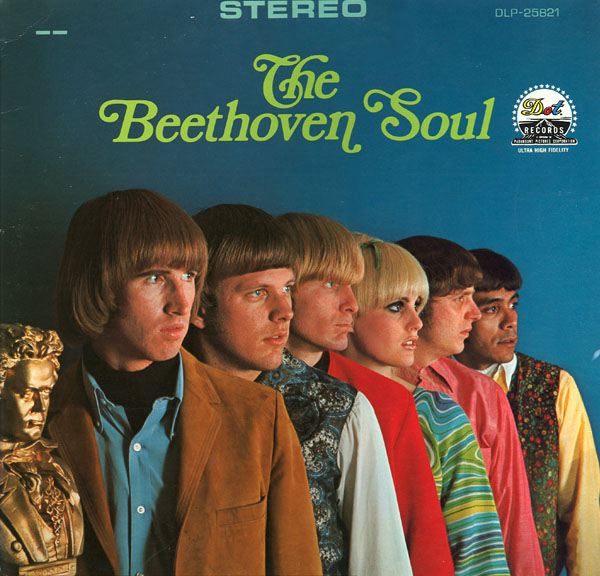

Here's a far out record from '67 or '68 (?) by the Beethoven Soul. I really can't find any info on this group, but this disc is cooooool. Kind of garage-ish stuff mixed with classical elements like flute, violin and lots of harpsichord. At times the singer has a little Roger Daltry in his voice, raspy and cool. Have to here this for sure, a real lost gem I think. Anyways here tis, in mono by the way cuz thats what my copy is, not stereo like in the picture. If you have any info on this group let me know!


01 the walls are high
02 walkin' through the streets of my mind
03 a violent crime
04 the price is high
05 all those little things
06 she won't see the light
07 new york's my home
08 dreams
09 good time gal
10 hey george
11 beggin' your pardon m'lady


Password: musiconthefringe.blogspot.com

DOWNLOAD

Leonard Nimoy "The Way I Feel"


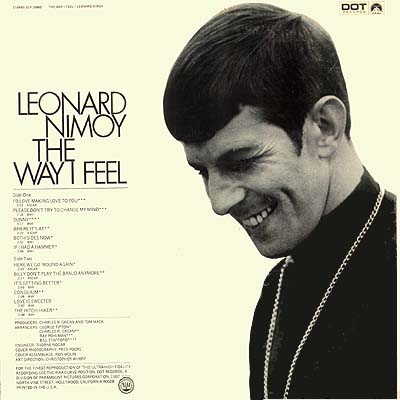
Here's a little oddity I found at a Salvation Army a while back. Leonard Nimoy was better known as TV's Spock from Star Trek, if you didn't already know that. This is a interesting listen, a little square at times, but fun. The first track is beautiful in my opinion. And there are a couple insightful narratives on love and the "answer" as well.
Often put off as a novelty, Nimoy's music has some intriguing qualities to it. I personally dig it a lot, hope you will too.


01 i love making love to you
02 please don't try to change my mind
03 sunny
04 where it's at
05 both sides now
06 if i had a hammer
07 here we go 'round again
08 billy don't play the banjo anymore
09 it's getting better
10 consilium
11 love is sweeter
12 the hitch-hiker

Password: musiconthefringe.blogspot.com

DOWNLOAD

The Langley Schools Music Project "Innocence and Despair"


The Langley Schools Music Project is a 60-voice chorus of rural school children from western Canada, untrained but captivated by melodic magic, singing tunes by the Beach Boys, Paul McCartney, David Bowie, The Bay City Rollers, and others. The students accompany themselves with the shimmering gamelan chimes of Orff percussion, and elemental rock trimmings arranged by their itinerant music teacher, Hans Fenger.
These 1976-77 recordings, captured on a 2-track tape deck in a school gymnasium, weren't staged to achieve money or fame, to sell albums or land a record contract. These kids played music because they loved it. Innocent, flawed and bittersweet, guided by Fenger's unsuspecting genius, these recordings deserve to be heard and preserved. They brim with charm and youthful élan, sparked by flashes of lo-fi Spectorian majesty and Pet Sounds subtlety. Call it folk art, outsider, or campfire rock -- the labels don't matter. These are gorgeous, heavenly artifacts. Period.
These recordings were originally contained on two 12" LPs, pressed exclusively for the students, their classmates, teachers, and parents. They were never intended for exposure outside the provincial Langley region. But after they came to the attention of Irwin Chusid, the Songs in the Key of Z author and record producer vowed to make these recordings commercially available. He forged a licensing/trustee agreement with the Langley School administrators, and with the blessings of Hans Fenger and several former student soloists who were located, these priceless recordings have now been introduced to the rest of the planet.

01) Venus and Mars/Rock Show (Paul McCartney & Wings)
02) Good Vibrations (The Beach Boys)
03) God Only Knows (The Beach Boys)
04) Space Oddity (David Bowie)
05) The Long and Winding Road (The Beatles)
06) Band On The Run (Paul McCartney & Wings)
07) In My Room (The Beach Boys)
08) I'm Into Something Good (Earl-Jean/Herman's Hermits)
09) Saturday Night (Bay City Rollers)
10) I Get Around (The Beach Boys)
11) Mandy (Barry Manilow)
12) Help Me, Rhonda (The Beach Boys)
13) Desperado (The Eagles)
14) You're So Good To Me (The Beach Boys)
15) Sweet Caroline (Neil Diamond)
16) To Know Him Is To Love Him (Teddy Bears)
17) Rhiannon (Fleetwood Mac)
18) Wildfire (Michael Martin Murphy)
19) Calling Occupants of Interplanetary Craft (The Recognized Anthem ofWorld Contact Day) (Klaatu/The Carpenters)

Password: musiconthefringe.blogspot.com

DOWNLOAD

Jesse Colin Young "The Soul of a City Boy"


Here's Greenwich Village scenester Jesse Colin Young's 1964 debut. Great folk/blues stuff that's a recent discovery for me (local record shop's $1.00 bin). Young later went on to form the Youngbloods of "Get Together" fame. Y'know "C'mon people now, smile on your brother....". Worth checking out for sure.

Twenty-two-year-old Perry Miller was spotted by pianist/composer Bobby Scott at Folk City in Greenwich Village and signed to Capitol Records under the auspices of Scott's employer, Bobby Darin. Scott took Miller, now renamed Jesse Colin Young, into New York's A&R Studios in the spring of 1964, and they emerged four hours later with this 31-minute, 11-track acoustic-guitar-and-vocal debut album. Young proved to be an adept guitarist conversant with all the basic fingerpicking folk patterns, and to have an expressive, elastic tenor voice with just a touch of graininess to keep him from sounding too smooth. His six originals were fine but unexceptional, and his covers of songs like "Rye Whiskey" were pleasant. In the folk boom of the early '60s, The Soul of a City Boy was just one more entry in the dominant style, and it would not be remembered today if Young had not gone on to bigger and better things. But it demonstrates that in his early 20s, he had a good grasp of the playing, singing, and writing talents upon which he would build in later years. The album did not sell upon release, but when it was reissued for the second time in January 1974 in the wake of the success of Young's Song for Juli album, it made the charts for several weeks. (Originally released as Capitol 2070 in April 1964, The Soul of a City Boy was reissued under the misleading title Jesse Colin Young & the Youngbloods in 1967 with the same catalog number; reissued under its original title as Capitol 11267 in January 1974; and reissued under its original title as One Way Records/CEMA Special Harkets S21-17526 in 1995.) William Ruhlmann, AMG

Four In The Morning
You Gotta Fix It
Rye Whiskey
Whoa Baby
Susanne
Black-eyed Susan
Same Old Man
Drifter Blues
Talk To Me
Stranger Love
I Think I'll Take To Whiskey

Password: musiconthefringe.blogspot.com

DOWNLOAD

Monday, November 27, 2006

Forgotten 45's: The Solid State
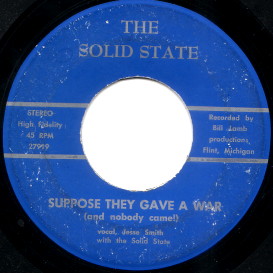

Here's a record by a group called The Solid State I've had since I was a kid. I got it in a box of 45's that belonged to my grandma, but I have no info about it or the band, nor can I find any. A really great psych/hard band sound on the A side "Suppose They Gave A War (And Nobody Came!)", an anti-war statement very relevent even today. The B side "Life's Confusion" is softer and features a different, more nasaly vocalist, and is more introspective. Both tunes utilize the then fairly new Wah-Wah pedal to full effect, in almost similar riffs. The label places this as being recorded in Flint, MI, close to my area, the year unknown I would guestimate as being somewhere between '68-'71, just judging by the sound and subject matter alone. A really great record and worth a listen for sure. When I first discovered it I played it to no end!

Jesse Smith: Vocals side A, Doil Smith: Vocals side B
Recorded by Bill Lamb Productions Flint, MI


Password: musiconthefringe.blogspot.com


DOWNLOAD

Forgotten 45's : The Lake Valley Four
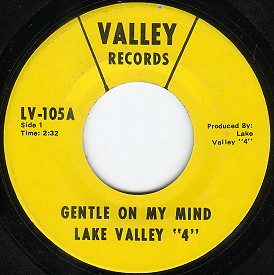

Here's an intriguing little artifact I picked up some time ago at an antique shop. I got two 45's and a promo photo of this band the Lake Valley Four. The back of the photo has this inscription: "Free picture with record. The Lake Valley Four back in the 70's years." Most likely very early 70's or even late 60's I'm thinking. Not sure where Lake Valley is, might be in Michigan, where I'm from, or might not be a town at all. But anywhoo this is an interesting listen. The female singer has a strange voice not unlike that of Peewee Herman or maybe Dylan in his country phase. The band isn't that great and the records are a little scratchy but I just think it's a pretty cool little find! My personal fave is their take on 'Everybody's Talkin".

Update: Since posting this on my old blog, Mark from Canton, Mi has given me some some usefull info on this group! Thanks Mark!

mark said...
I've seen this group many times! The Lake Valley 4 used to perform at a campground "Fitchburg Wilderness Park" near Stockbridge, Michigan every Sturday night. It must've been 1972-1974. The members, if my memory suits me, where" Jim Libey on guitar, Cindy Gadbury on vocals, Sue Libey on drums and Harold ____? on accordian. They performed country and soft pop for the campground crowd. I actually purchased their 45 with an original "Lonely Star". I think I forked over 50 cents for it. Boy! Did your post bring back an old memory!!! -Mark, Canton, MI

Disc One LV105: A) Gentle on my mind B) Everybody's talkin'
Disc Two LV106: A) Shoeshine man B) How do you mend a broken heart

Password: musiconthefringe.blogspot.com

Michael Hurley and Pals "Armchair Boogie"
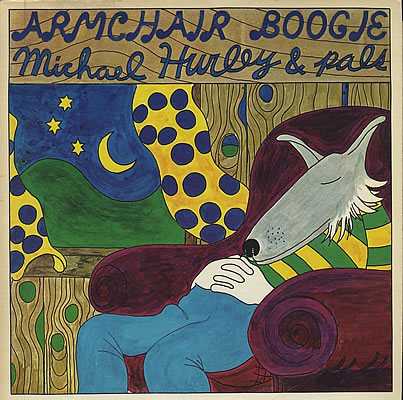

In a way this is Michael Hurly's debut album. He had recorded an album for Folkways in 1965, but didn't return again for a few years, laying low and writing songs for the Youngbloods and others. In 1971 he signed with the Youngbloods' Racccoon label and recorded this great album with their lead Jesse Colin Young producing and playing on a couple tracks. An all around charming, warm album. Humorous and strange at times but very easy. Sound like it was recorded in a small room (I think it was), adding to it's hominess. The record includes a large comic book following the antics of two hick wolves, Jocko and Boone and is hilarious. Ripped from vinyl, Check it out!
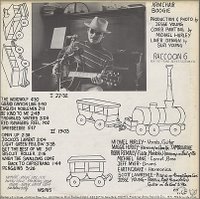
1. The Werewolf
2. Grand Canyon Line
3. English Noblemen
4. Be Kind To Me
5. Troubled Waters
6. Red Ravagers Reel
7. Sweedeedee
8. Open Up
9. Jocko's Lament
10. Light Green Fellow
11. Get The Best Of Me
12. Biscuit Roller
13. When The Swallows Come Back To Capistrano
14. Penguins

Password: musiconthefringe.blogspot.com

The Music Machine "Turn On The Music Machine"


The Collectables label has given this CD a new and misleading subtitle, and (to judge from the reviews below) that's obviously created a lot of confusion about its content. To set things straight: tracks 1-12 are the complete contents, in order, of the Music Machine's first album, "(Turn On) The Music Machine," which was released in 1966 to back up their hit single "Talk Talk." Tracks 13-16 are different (earlier?) recordings of songs from the second album, "The Bonniwell Music Machine," which sank without a trace in 1967. So this disk is essentially a reissue of the first album, with four bonus tracks added. Even the cover of the CD booklet is identical to that of the first LP (other than the altered title).
In recent years, Sean Bonniwell, the leader and only persistent member of the group, has explained the multiple cover versions on this album as something Warner Brothers forced on him. His original concept was to have little instrumental segues between the tracks, so that each album side was a continuous experience --- the output of a "music machine" --- but the label shot that down too. Bonniwell was a few years ahead of his time, unfortunately, and these recordings don't represent the full range of his talent.
Nonetheless, this album absolutely shouldn't be put down. For many years after the 60s garage revival really kicked in it was the only Music Machine product available, and many people (including me) loved it for the combination of sinister organ sounds and deep vocal melodies, as well as for the unprecedented-in-1966 percussive guitar violence of "Talk Talk." Bizarre, dark Bonniwell originals like "Come On In" blow away the sappy-60s pop that gets in elsewhere. (If you ever took the Doors' songwriting seriously, you won't after hearing this band.)


1. Talk Talk
2. Trouble
3. Cherry Cherry
4. Taxman
5. Some Other Drum
6. Masculine Intuition
7. People In Me, The
8. See See Rider
9. Wrong
10. 96 Tears
11. Come On In
12. Hey, Joe
13. Double Yellow Line
14. Absolutely Positively
15. Eagle Never Hunts The Fly, The
16. I've Loved You

Password: musiconthefringe.blogspot.com

Saturday, November 18, 2006

Daniel Johnston PART ONE

Daniel Johnston is one of the most incredible songwriters you've never heard. Destined for the underground, his sound is bare bones, usually nothing more than voice with piano, guitar or chord organ. To some it may sound elementary, but when you dig deeper you find some of the most heart wrenching songs ever written. Oddly enough his popularity stems from his own hand made cassette demos that he passed out to friends and fans. Here are two of his earliest cassettes.


"The What of Whom"
Daniel's tape from August 1982.

Password: musiconthefringe.blogspot.com


"Don't Be Scared"

Daniel's tape from July 1982.

get this over at Ninja Berserker's site

POST LINK

Syd Barrett "The Madcap Laughs"


Having left Pink Floyd in 1968 after a daily LSD habit had taken its toll, Syd Barrett's first solo album finally appeared two years later with ex-Floyd sidekicks David Gilmour and Richard Wright riding shotgun with him in the studio. The Madcap Laughs is a brilliant but brittle album, with every strum of the electric guitar seeming to take its toll on Barrett's increasingly frayed nerve strings. On songs such as "Love You," his state of mind is well concealed beneath the sort of jolly jangle-pop Blur would later indulge in. On "Dark Globe," however, the strain is palpable: "Please lend a hand ... won't you miss me? Wouldn't you miss me at all?" he pleads, ominously. The best tracks are "Octopus," which possesses all the controlled mania of early Floyd, and "Golden Hair," a still moment of musical rapture whose lyric is taken from a James Joyce poem. --David Stubbs, Amazon.com

Password: musiconthefringe.blogspot.com


Seu Jorge "Life Aquatic Sessions"


Raised in the slums of Rio, Brazil, singer/songwriter Seu Jorge used his formidable talent and undeniable charm to great effect in director Wes Anderson's seafaring comedy the Life Aquatic with Steve Zissou as a guitar strumming deckhand. The catch was that Pelé dos Santos only knew how to play Portuguese versions of David Bowie tunes, all 13 of which are featured on Hollywood's Life Aquatic Studio Sessions. Jorge possesses a voice that exudes the same regional comfort as fellow countrymen Milton Nascimento and Caetano Veloso, and his warm and loose guitar playing matches his timbre, resulting in a batch of covers that retain the original framing of the Bowie classics, while injecting a sunny island sweetness into their very core. While the very idea reeks of kitsch, the end product is surprisingly poignant and agreeable. Even the Thin White Duke himself seems taken with the idea, as he states in Aquatic's liner notes that "Had Seu Jorge not recorded my songs acoustically in Portuguese I would never had heard this new level of beauty which he has imbued them with." - by James Christopher Monger, AMG
Great music from a great movie. Wes Anderson is among the best directors of our time, and his soundtracks are alway an wisely chosen group of songs from artists on the fringe of music. See his movies!

1. Rebel Rebel
2. Life On Mars?
3. Starman
4. Ziggy Stardust
5. Lady Stardust
6. Changes
7. Oh! You Pretty Things
8. Rock N' Roll Suicide
9. Suffragette City
10. Five Years
11. Queen Bitch
12. When I Live My Dream
13. Quicksand
14. Team Zissou

Password: musiconthefringe.blogspot.com


A Still from the film "The Life Aquatic"

Friday, November 17, 2006

Dion "Dion"


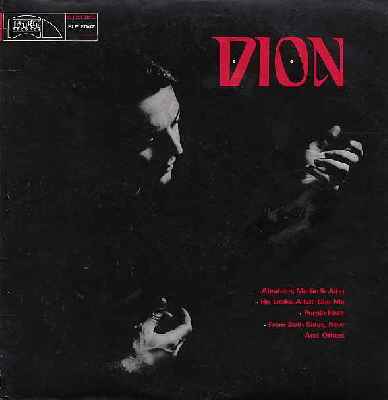
This is Dion's great lost album from 1968. Dion is famous mostly for his work with the Bellmonts for great songs such as "The Wanderer" and "Runaround Sue" with their aggressive teenage snarl. But drug problems caused him to go on hiatus for a few years. When he came back with this album his sound had matured to another level, and his voice had softened into that great balladeer not leaving behind some of his stylistic scat singing though. I really dig this album a lot, its very easy going and soothing at times. His take on some of these covers is truly original, the best example being Hendrix's "Purple Haze". Also includes his comeback hit "Abraham, Martin, and John" and his own stirring war ballad "He Looks A Lot Like Me". Not sure if this is out on cd or not but here is a clean sounding rip from my vinyl copy.

Abraham, Martin And John
Purple Haze
Tomorrow Is A Long Time/Everybody's Talkin'
Sonny Boy
The Dolphins
He Looks A Lot Like Me
Sun Fun Song
From Both Sides Now
Sisters Of Mercy
Loving You Is Sweeter Than Ever

Password: musiconthefringe.blogspot.com

Marr'Del "The Mystery of Love"
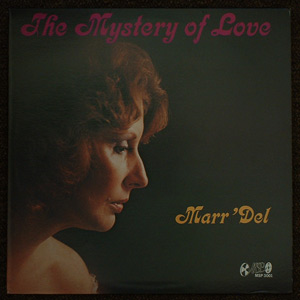

"My music and poetry is an attempt to move you into the depths of your heart... beyond the thinking mind... deep into the flow of Love that is the Godstuff of which you are made... and when that happens, you will never be the same."-- Marr'Del, from the liner notes
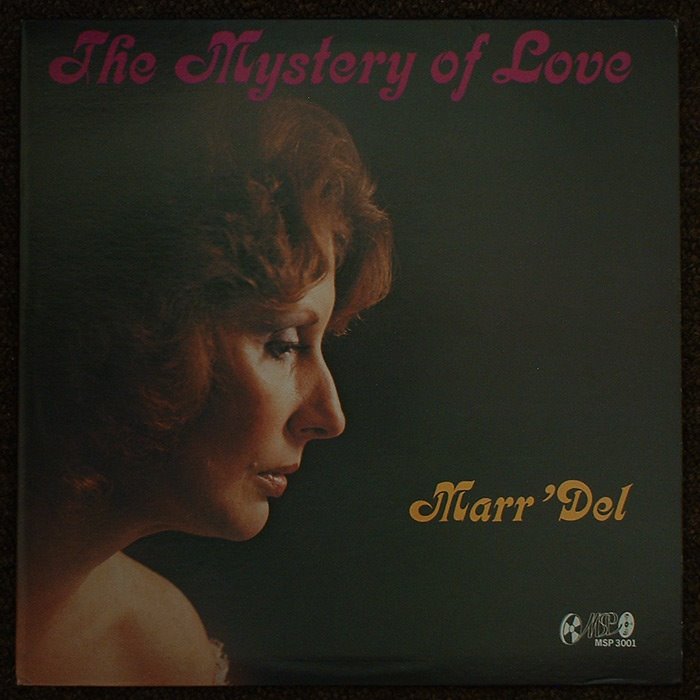
This is it -- the notoriously unknown 1979 Ohio folk-psych classic The Mystery of Love by Marr'Del. Each side features three tracks that are slow, quiet, dreamy and sparse; 'Psalm to the Sun' and 'Lavender Thunder' with guitar, the other four dialogues or monologues with autoharp accompaniment. Atmospheric nature recordings pepper the album, but every other sound comes from Marr'Del herself. (As she wrote to me, "I had no musical training, was completely self-taught on the guitars and harp, and I just let it happen. I guess that's good we don't know the complexities of some of the things we accomplish, or we would never undertake the project/situation.") This is an incredibly brave and moving record that will enchant some and embarrass others in its spiritual intensity.

The Mystery of Love MSP-3001, 1979
1. Maria (12:18)
2. Butterfly Friend (4:54)
3. Psalm To The Sun (6:46)
4. Celestial Cathedral (7:43)
5. Lavender Thunder (4:29)
6. I Want To Be A Wave (4:18)

Thanks to www.nothingexceptional.com for this great find.

Link here to download the tracks individually and read more.

Tuesday, November 14, 2006

"Girls With Guitars"


Ace Records out of the UK follows up on some other all female 60s rock cds they've issued in the past (including the cd compilation of She/Hairem music called She Wants a Piece of You). It's great to hear a modern compilation which delves into the area that is so under represented on legit cds. She and The Hairem are of course featured (Come On Along and Outta Reach - both highlights from She Wants a Piece of You) and other highlights include:

The Beattle-ettes's let it hang out Beatles response style on Only Seventeen which answers a number of Beatles tunes while also emulating Lesley Gore's beat sound.
The Pandoras' I Could Write A Book About My Baby has been collected bootlegged (on Touch the Wall of Sound) so it's good to hear this Boston area all female rock band get a legit cd reissue - they've got a number of singles worth checking out, along with this girl group gem.

The Goodees give us the southern raunchy best on their Stax/Volt inspired take on the fratboy classic Double Shot (Of My Baby's Love) singing lyrics girls weren't really singing in 1969:

"What happened to me last night
That boy of mine, he loved me so right
He loved me so long and he loved me so hard
I finally passed out in his front yard
It wasn't wine that I had too much of
It was a double shot of my baby's love!"

The Goodees are a vastly overlooked girl group who recorded for Stax' pop label Hip and consisted of Sandra, Kay and Judy. They released one album on Hip called Candy Coated Goodees and a handful of singles (some of which that didn't make it on the lp and which had Stax people like Isaac Hayes helping out) which is all dying to be reissued on cd.

The Daughters Of Eve are an all female band definitely worth checking out. Their tune Help Me Boy (a tune also cut by Eric Burdon and the Animals earlier in 1967 as Help Me Girl) will definitely get under your skin with its intense arrangement and sleepy girl lead vocal which reminds me of The Goodees style. You can read about The Daughters Of Eve here.

The 2 Of Clubs try their hand at the Petula Clark tune Heart - which emulates the beat of someone's heart in the rhythm changes - something so unique to 60s songwriting style and worth hearing just for that 60s southern Muscle Shoals sound.

The call and response Headcoatees like putdown of The Angels' Get Away From Me that has a slinking groove, sassy dual female lead vocals and hip organ solo. The fiery Boy, What Will You Do Then by Denise & Company will definitely fire you up with the burning harmonica and Denise's angsty lead vocals.

Al Casey gets some help from the K-C-Ettes on the fab Guitars, Guitars, Guitars which of course is a song about the wonderful sounds of guitars.

1. My Baby - The Girls
2. I'd Rather Fight Than Switch - The Tomboys
3. Get Away From Me - The Angels
4. Boy, What You'll Do Then - Denise & Company
5. Chew Chew Fee Fi Fum - Goldie & The Gingerbreads
6. Only Seventeen - The Beattle-Ettes
7. Do The Dog - Sugar & The Spices
8. I Got A Guy - Kathy Lynn & The Playboys
9. Double Shot (Of My Baby's Love) - The Goodees
10. (I Could Write A Book) About My Baby - The Pandoras
11. They Are The Lonely - Pat Powdrill & The Powerdrills
12. Heart - The 2 Of Clubs
13. Help Me Boy - The Daughters Of Eve
14. Skinny Vinnie - Goldie & The Gingerbreads
15. Hully Gully Guitar - The Percells
16. Rock City - Kathy Lynn & The Playboys
17. Sticks And Stones - (Lonnie Mack &) The Charmaines
18. Take My Hand - Goldie & The Gingerbreads
19. Boys Can Be Mean - Sugar & The Spices
20. Guitars, Guitars, Guitars - (Al Casey With) The K-C-Ettes
21. Vip - Goldie & The Gingerbreads
22. Come On Along - The Hairem
23. My Love - The Girls
24. Outta Reach - She

Password: musiconthefringe.blogspot.com

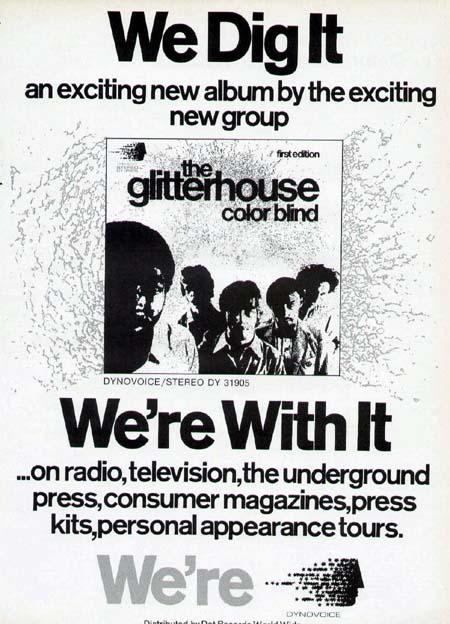
The Glitterhouse "Color Blind"


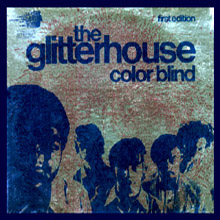
Great psychedelic pop from 1968, with lush production from Bob Crewe. A great album that has yet to be remastered in CD form (although it is available on a compilation that includes most of the bands work, it is only recorded from a vinyl copy). If you've ever seen "Barbarella" you'd remember this group for doing the title theme ("Barbarella, psychedella.........")

The original liner notes from the Glitterhouse's "Color Blind" album, written by then popular NYC FM radio jock, Rosko:

I was a vacuum - I smelled a rose - that vacuum was filled. I was a vacuum - I saw a child - that vacuum was filled I was a vacuum - I touched my love - that vacuum was filled. I was a vacuum - I heard music - "The Glitterhouse" - expressing extensions of everything we feel; extensions of what we are - the reward of what we could be; .....new dimensions of the folly and heroics of society; of fickle lady justice and the long nights she capriciously gives injustice a lay;.....extensions of words set to music effecting a union so complete that it becomes music set to words. I heard music - "The Glitterhouse" - and my vacuum was filled...listen and fill your vacuum. - ROSKO- WNEW-FM New York 1968

Password: musiconthefringe.blogspot.com

Monday, November 13, 2006

Larry Coryell "Coryell"
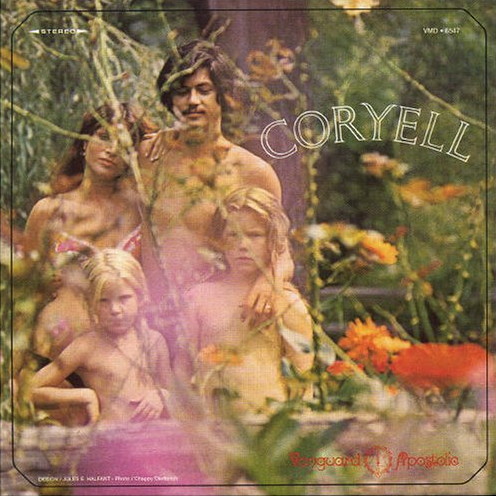

A repost from my old blog that seemed to be pretty poular.
This is Larry Coryell's second solo album, and it's a real mind blower. Coryell is often categorized as a jazz guitarist, but this one is a jazz - rock - funk fusion. The first track "Sex" is a mind numbing psychedelic groove complete with crazy leslied vocals. An all around good album to get down to, with some soft moments as well.

CORYELL - 1969 (VSD-6547)

Larry Coryell, guitar, vocals, piano (Beautiful Woman)
Bernard Perdie, drums
Albert Stinson, bass (The Jam With Albert, No One Really Knows Part 2)
Ron Carter, bass (Beautiful Woman, Ah Wuv Ohh)
Chuck Rainey, bass (Sex, Elementary Guitar Solo #5, No One Really Knows Part 1, Morning Sickness)
Mike Mandel, organ, piano (Elementary Guitar Solo #5)
Jim Pepper, flute

01Sex
02Beautiful Woman
03The Jam With Albert
04Elementary Guitar Solo #5
05No One Really Knows
06Morning Sickness
07Ah Wuv Ohh

Mississippi John Hurt "The Immortal"


One of the best albums of country blues ever recorded. The fingerpicking is delicate, the vocals mellow and sweet. Many tunes that remain associated with Hurt are included here in versions that rival his legendary recordings from the late '20s. "Richland Woman Blues," "Stagolee," "The Chicken," and "Since I've Laid My Burden Down" sound as fresh as ever in these '60s versions. This album leaves little doubt as to why Hurt was so beloved after his rediscovery.


Password: musiconthefringe.blogspot.com

Tuesday, November 07, 2006

Serge Gainsbourg "Histoire de Melody Nelson"


I wish I could speak better French, so that I might fully understand the words on Histoire de Melody Nelson. According to my trusted French friends, Gainsbourg's lyrics are pure poetry, bestowing a level of brilliance to his music that I literally can't comprehend. But that hasn't deterred me. Familiar only with the bare facts of Melody Nelson's darkly sensual story, my imagination performs a miraculous feat of translation, in which I feel the hidden meaning behind Serge's songs, losing myself in his impenetrable lyrics like a voyeur in a foreign land. I listen on, unsure of what I'm hearing, but titillated nonetheless by all the obvious decadence. French or otherwise, you don't have to speak the language to experience Melody Nelson's incredibly great music, but a little backstory certainly helps. Taken together, the seven songs on the album form a lurid tale of obsessive love told with extraordinary intelligence and humor, making it the musical equivalent of Nabakov's novel, Lolita. The album is about a lecherous, middle-aged, Rolls-Royce driving Frenchman (Serge, of course) who runs into a virginal teenage cyclist-vixen (played by his young and beautiful British-actor wife, Jane Birkin, who sings on the album and appears on its cover seductively clutching a rag doll against her bare breasts —hello dolly!). Serge the hunter stalks his prey, and with seduction comes love, which is consummated at "L'Hotel Particulier" (and for us all to hear on "En Melody"). The affair ends in rock-opera tragedy, with the flighty Melody killed in a plane crash, leaving behind a shattered wreck of a man to tell us his harrowing tale on "Cargo Culte." These scintillating details should provide enough grist to set any good Anglo-Saxon imagination grinding. What language barrier? Story aside, the music on Melody Nelson is way ahead of its time—an experimental blending of spoken-word vocals, lushly epic pop strings, soaring choir voices, funk-flavored rock grooves and loud guitar. According to Beck, the album is "one of the greatest marriages of rock band and orchestra...It's very cool and its dynamic is genius—there's this band that's completely rocking on this almost acid tangent, but they're buried in the mix with him (Gainsbourg) whispering on top, and he's the loudest thing on it."A perfectly realized concept album, a sonically inventive poem of perversion, Melody Nelson was hailed by few critics of its time, failing to become a hit, even in France. Today we can better appreciate its magnitude, with disciples like Air and David Holmes successfully slipping the Serge sound into the musical mainstream. Histoire de Melody Nelson stands as one of the shortest essential albums in rock history (my only complaint, if you can call it that), with a total running time of 27:06. Still I warn you: spend a good half-hour with it, and you might soon start wanting French lessons.—John Ballon

Password: musiconthefringe.blogspot.com

DOWNLOAD

Big Boy Pete "World War IV: A Symphonic Poem"
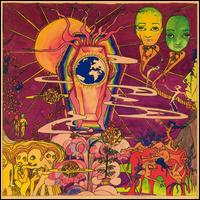


A psychedelic oddity from the warped mind of Big Boy Pete (aka Pete Miller), an entirely unreleased masterwork from his prodigious and endlessly creative 1966-1969 period. World War IV is labeled a "Symphonic Poem," and whatever that exactly connotes in pop terms is anyone's guess. It is certainly not a conventional song-based effort but a true epic, one that is segmented into extended classical-like sections with titles such as "Overture" and "Movement." One certainty is that the album is wide-lensed, a sweeping and ambitiously panoramic experimental piece of avant-garde psychedelia that shares numerous qualities with the equally idiosyncratic but still commercially minded psyche that Big Boy Pete had previously created, while transferring those qualities to a much larger, mural-sized canvas. As can be expected, the storyline (if it can be called that) is willfully obscure and far-out even by psychedelia's standards, loosely imagining a fourth world war peopled not by military personnel but rather a host of eccentric characters. While World War IV is not exactly designed to be accessible in the manner of a collection of Big Boy Pete's pop songs, it sustains both a painterly and literary quality that is every bit as enveloping. In fact, John Lennon loved the album and Apple Records nearly released it in 1969. Miller's uncanny penchant for wordplay is vaguely Beatlesque, although a more appropriate comparison might be that World War IV is a British counterpart of sorts to Love's Forever Changes, betraying the same kind of warped worldview shared by Arthur Lee. Demented observations and mad, darkly humorous puns often undercut the whimsicality of the piece. Miller imagines a world in which the crucifixion of Christ, Nazi Germany, Hansel & Gretel, Oz, Alice's wonderland, Barnum & Bailey's circus, mediævalism, and Wordsworth seem to coexist and intermingle in a freakish alternate universe in the countryside of England. Biblical imagery abounds, as do fairytale characters, gypsies, and armies of children straight from the "outsider" art of Henry Darger. Without immediately dating itself, the album contains embedded commentaries on war, spirituality, political power, and a great number of other subjects that were especially endemic to the era. There must be fragments of 20 or 30 individual songs spliced into the mix -- ranging in style from mindbending psychedelia to Baltic folk melodies -- including perhaps the most beautifully sustained example of backwards phasing (during the dirgelike fifth section, "Quietus") in the entire psychedelic canon. The cycle culminates in the stunningly ambitious "Finale." Prophetic, unpredictable, labyrinthine, and frequently disturbing, World War IV is just about as imaginative as pop music gets. It is ultimately impossible to follow the path that Big Boy Pete is trying to burn through the forest, but it is thrilling even when the listener gets lost along the way. The album, as one lyric during "Movement 2" has it, is "deformed so beautifully." Not the first stop for neophytes looking to understand the Big Boy Pete legacy by any means, World War IV may nevertheless be his definitive artistic statement, and the premier slice of "outsider" pop from the period. ~ Stanton Swihart, All Music Guide

DOWNLOAD

Monday, November 06, 2006

Moondog "The Viking of Sixth Avenue"


While many modern music fans have heard of Moondog—his counterculture reputation and musical achievements have been celebrated by hipster and conservatoire musicians alike for over fifty years—relatively few have actually heard his music. Acquainted with and endorsed by Charlie Parker, Lester Young, Igor Stravinsky, and Artur Rodzinski in New York in the late '40s and '50s, and by Janis Joplin, Frank Zappa, Steve Reich, and Philip Glass in the '60s and '70s, his most recent high-profile champion has been Elvis Costello, who booked him for London's Meltdown Festival in '95.

Moondog lost his sight in an accident at age sixteen, and his musical development was accelerated at various schools for the blind. He moved to New York in '44 and took the name Moondog (he was born Louis Thomas Hardin) in '47. Around this time he also adopted full-on Viking dress—to disassociate himself from Christianity, he explained—and began playing his tunes on the streets of New York. The streets remained his preferred performance platform throughout his life.

Moondog's music is simple and almost childlike—in the best sense of the word, naive. Most of these tracks, melodically attractive and rhythmically virile, last little more than two minutes, providing brief expositions of rhythmic or textural ideas. Having put an idea forward, Moondog rarely shows any interest in developing it, preferring to move on to another thought. Even the closing “Invocation,” at ten minutes by far the longest track on the album, recorded at the Meltdown gig and featuring a full-blown symphony orchestra, is a sixteen-part canon which simply repeats the same low A throughout. Apart from ”Invocation,” “Lament 1 - Bird's Lament,” and “All Is Loneliness,” most of the tracks are overdubbed, with Moondog playing all the instruments.

This wonderful anthology, packed with rare-as-hens'-teeth recordings, spans Moondog's output from '49 to '95, focusing primarily on his prolific '50s output. Several labels are sourced, including Moondog's own eponymous imprint and Woody Herman's Mars, as well as Brunswick, Prestige, and Folkways. Two tracks come from his '70 Columbia album (he'd been signed at Janis Joplin's urging): the madrigal “All Is Loneliness,” which had been covered by Big Brother & The Holding Company on their debut album; and “Lament 1 - Bird's Lament,” composed in memory of Charlie Parker and one of Moondog's signature tunes.

Moondog's period in the counterculture spotlight in the early '70s brought him a brief taste of fame, but no fortune. He remained true to his roots and his principles, and celebrated his newfound status as a Columbia recording artist by moving his street pitch to the pavement opposite the label's plush Manhattan headquarters.

In the mid '70s, Moondog moved to Germany, where he continued playing and composing up until his death in '99. The world is a better place for his music, and if you haven't heard any of it yet, this rich and beautiful collection is the perfect place to start.

Personnel: Moondog: percussion, drums, tuned percussion, saxophones, flutes, oud, vocals, violin, pipe organ, tape manipulation, miscellaneous; Orchestra (6,15,36).

DOWNLOAD


© New Blogger Templates | Make Money Online